• Skip to primary navigation
  • Skip to main content
  • TTI Home
  • TTI Library Catalog
  • Aviation Research Home
  • Contact Us
Texas A&M Transportation Institute logo
Aviation Research
  • About
  • System Planning and Research
  • Aviation Education
  • Texas Aviation Conference
  • Publications
    • Wingtips
  • News

Chris Sasser

National Aviation Hall of Fame Presents Induction Medal to the City of San Antonio

May 6, 2020

On January 8, 2020, a presentation was conducted at the Stinson Municipal Airport in San Antonio. The National Aviation Hall of Fame (NAHF) induction medal – posthumously presented to Katherine Stinson last year – was placed on permanent display at Stinson Municipal Airport for the inspiration of all who read of Stinson’s impact on the nation’s aviation history.

Making the presentation to City Councilwoman Rebecca Viagran and Thomas Bartlett, Interim Director for the San Antonio Airport System, was a delegation from the National Aviation Hall of Fame. Included in the group was 2009 NAHF Enshrinee Colonel Eileen Collins, USAF (Ret) who presented Katherine Stinson for enshrinement. Col. Collins is the first woman to command a space shuttle and was the Commander on STS-114, the first Return-To-Flight Mission after the loss of the Columbia.

“The origin story of the Stinson School of Flying is special because of who started it and how it came about. Born from Katherine Stinson’s pioneering vision of teaching aviation to anyone who wanted to fly, today Stinson Municipal Airport remains an enduring legacy to the woman who dared everyone to soar greatly,” said Councilwoman Rebecca Viagran, District 3.

Katherine Stinson was inducted into the NAHF for a number of pioneering aviation accomplishments. Among them include: becoming one of the first females in the United States to earn a pilot’s certificate, founding the Stinson School of Flying (1915), training World War I military pilots and becoming the first woman to carry airmail and the first woman to exhibit as a circuit pilot. Stinson also set multiple distance and endurance records.

Reprinted by permission of Helotes Echo, copyright January 2020.
Filed Under: Wingtips Spring 2020 Tagged With: National Aviation Hall of Fame, Stinson Airport

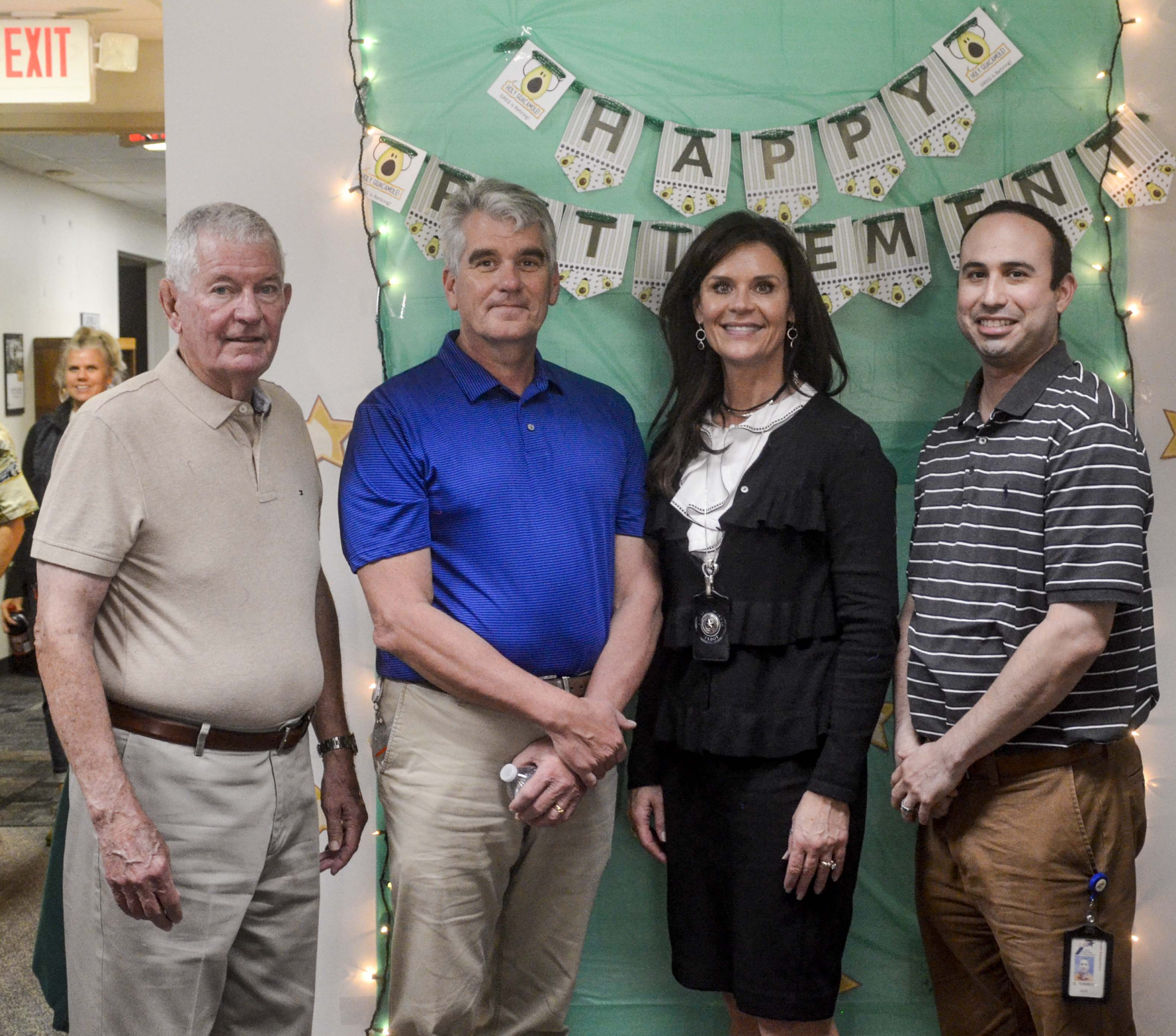
Aviation Division Retirements

May 6, 2020

Former Aviation Division Director David Fulton, Newly Retired Planning Director Greg Miller, Director of Grants and Administration Kari Campbell and Director of Engineering Eusebio Torres.

The Aviation Division has had several high profile retirements over the past few months.

Director of Planning Greg Miller retired in December 2019 after 27 years of service. Miller began his career at the Aviation Division by designing a software application before working his way up to planning director. His colleagues, family and friends gathered on December 5, 2019, at a luncheon to celebrate Miller’s career.

“I hope that you look back on your time here with fond memories and a great source of pride,” said Director of Grants Kari Campbell. “You will certainly be missed.”

Miller’s retirement plans include lots of traveling with his wife, Mary. His colleagues presented him with gifts which included a signed model airplane.

“You are an amazing group of people,” said Miller. “I will miss everyone a lot—it has certainly been my pleasure to work with each and every one of you.”

Long-time Director of Flight Services and Division Deputy Director Jay Joseph also retired in September after joining the Aviation Division in the Fall of 2006. Prior to joining the Aviation Division, Joseph retired from the United States Marine Corps as a Colonel after 29 years of service, including a tour with the Navy Blue Angels, and also was a pilot for U.S. Air for 21 years. Among Joseph’s accomplishments were his efforts to upgrade the TxDOT fleet, which came to fruition in 2019.

Filed Under: Wingtips Spring 2020

New Human Trafficking Legislation Requires Airports to Take Action

May 6, 2020

Senate Bill 1219 took effect of September 1, 2019. The following outlines the key provisions of the bill.

  • Human trafficking signs detailing assistance available to victims of human trafficking are to be displayed at “transportation hubs,” including in buses, at bus stops, in trains, at train stations, in rest areas and at airports.
  • The Attorney General (AG) is in charge of the design and content of the sign regarding services and assistance available to these victims, and the AG’s office by rule will prescribe the hubs required to display these signs. Here are some of the pieces of information that must be included:
    • The telephone number and Internet website of the National Human Trafficking Resource Center
    • The key indicators that a person is a victim of human trafficking
  • The AG will also prescribe the manner in which the sign must be displayed at the hub and any exceptions. The AG is also responsible for enforcement.

Filed Under: Wingtips Spring 2020 Tagged With: Senate Bill 1219

A Story of Service and Resilience–Texas Gulf Coast Regional Airport

May 6, 2020

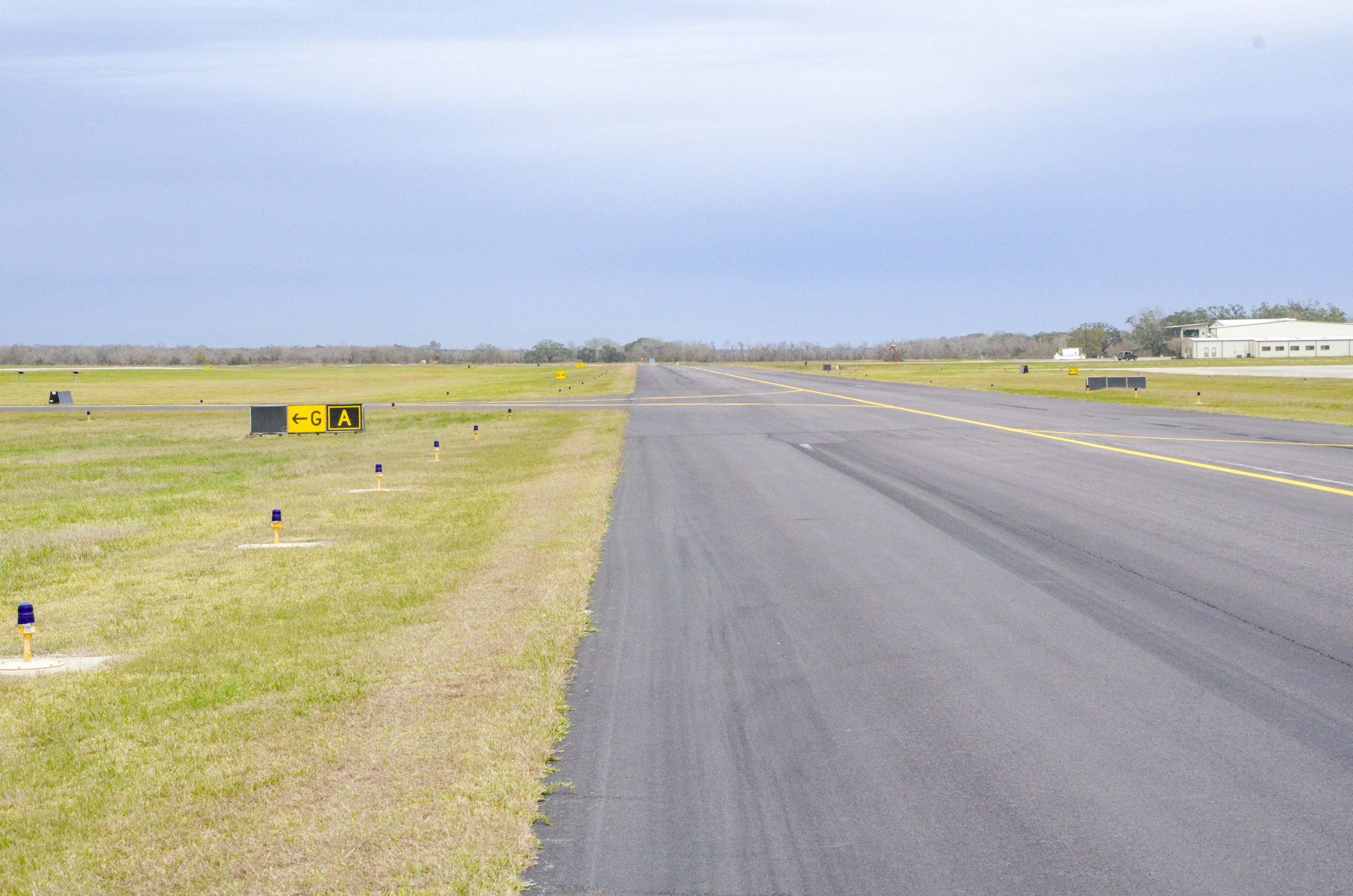
Runway at Brazoria County Airport.By Chris Sasser
Texas A&M Transportation Institute

As Texas Gulf Coast Regional Airport Manager Jeff Bilyeu stared down yet another flooding event from Hurricane Harvey in 2017, he had to wonder when his airport was going to catch a break. After all, in 2016, historic flooding in central Texas made its way downstream to the airport. When the Brazos River finally crested, it was at record levels causing flooding at the airport and the eventual closure for over a week. The airport entry road was underwater for a week. But it’s not in Bilyeu’s nature to back down from a challenge; he and his staff banded together to surge into the future. Their efforts were rewarded by being named the 2019 Airport of the Year at the Texas Aviation Conference.

“The most important thing is the dedication of our staff to get us up and going again,” said Bilyeu. “They are an amazing group of people to work with. They make everything out here happen whether it’s a beautiful day or weather events such as floods, they keep everyone safe. Four of the past five years we’ve had some type of flooding and it’s just characteristic of this area when we see significant rainfall in this area’s watershed.”

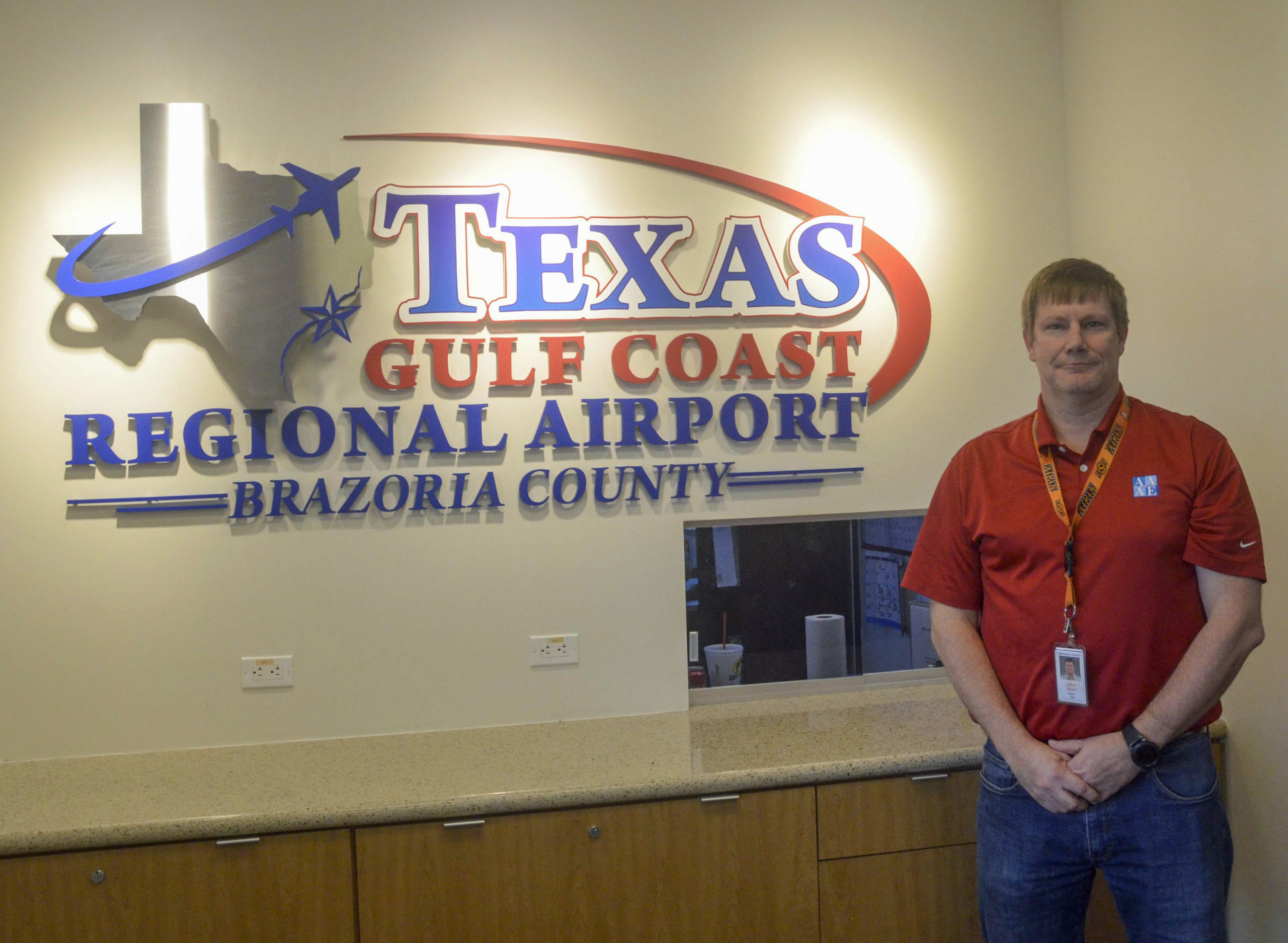
Texas Gulf Coast Regional Airport Manager Jeff Bilyeu.

To help mitigate and prevent such future flooding, the airport and Brazoria County paid for realignment of drainage and construction of drainage ditches. The airport receives remarkable support from county officials.

“We’re in a unique location in that the airport serves our two immediate cities,” explained Bilyeu. “We’re growing relationships with Lake Jackson on the utility side and on the land use side. And their industrial development corporation is now interacting with us for future development.”

Many aviation businesses operate out of the airport, including Dow and Bucee’s, with both having based aircraft at the airport.

Being a vital hub of commerce, the airport has undergone many improvements in the past few years including:

  • a master plan update
  • a runway reconstruction project
  • the design and construction of a new terminal building
  • the installation of wildlife fencing
  • a wildlife hazard assessment
  • apron and ramp reconstruction
  • FBO hangar construction, and
  • city water plant and sewer construction

The airport is also home to the Runway Café, a busy onsite restaurant that serves up delicious local food for both flyers and the community who know where to find the best fried shrimp around.

Bilyeu believes in mentoring to the next generation of aviation professionals. He has a continued relationship with Texas Southern University and has mentored at least five students in the past three years. Those students have completed three month-long onsite internships in an effort to help them learn as much as possible at this airport. He has helped them to learn the importance of networking for job placement and led them to be involved in aviation organizations. He also speaks every year at multiple elementary schools and junior highs on Career Days in an effort to educate young people about the career options that are available
for young men and women within aviation.

“The airport is the front door to the County for many business people and visitors to our area,” notes Bilyeu. “It’s important that we offer a professional first and last impression for folks traveling to and from our County.”

Filed Under: Wingtips Spring 2020 Tagged With: Jeff Bilyeu, Texas Gulf Coast Regional Airport

East Texas Gem–Angelina County Airport

May 6, 2020

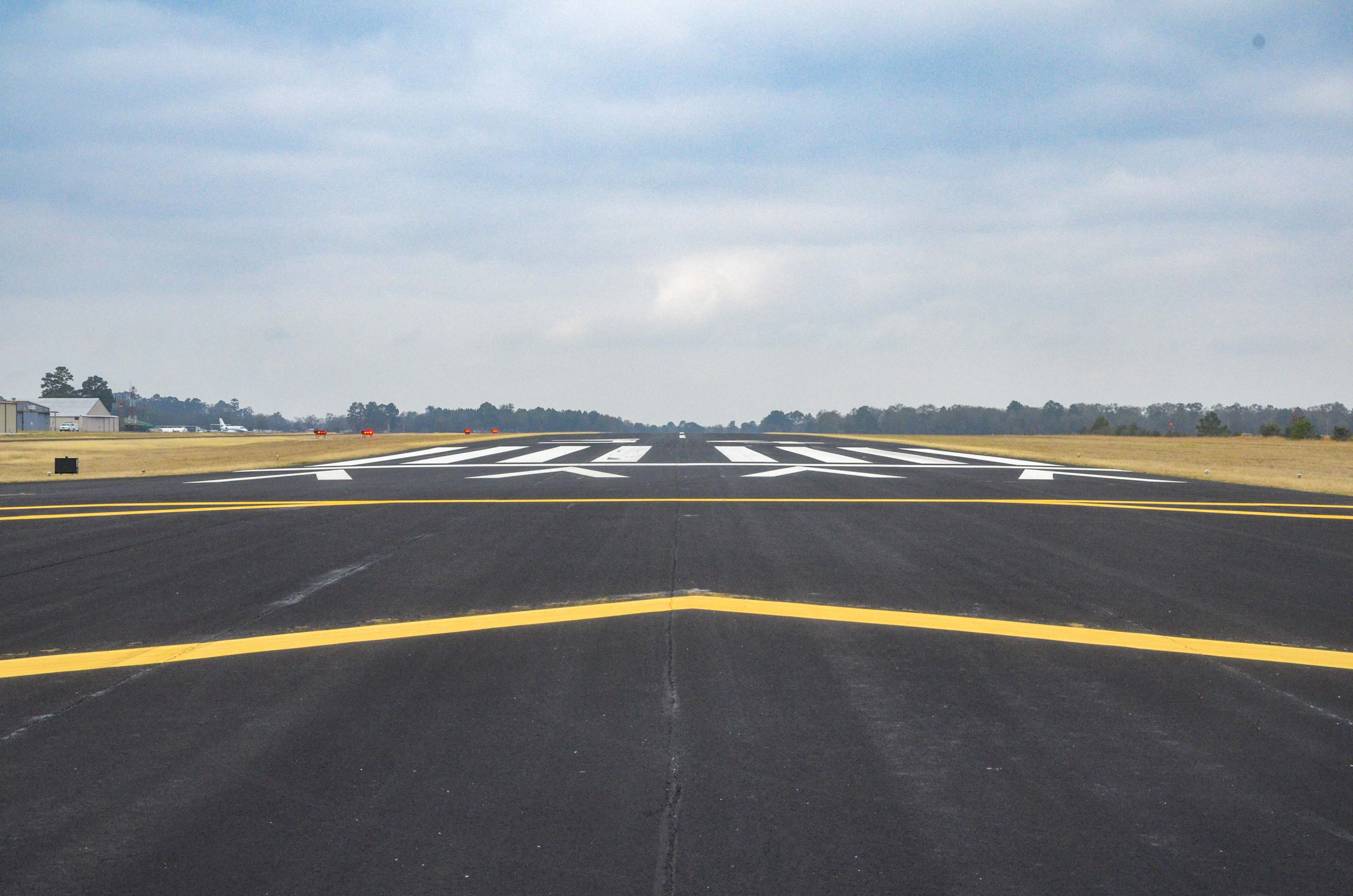
Runway at Angelina County Airport.

Runway at Angelina County Airport.

By Chris Sasser
Texas A&M Transportation Institute

The entrance road of the Angelina County Airport is quite a sight. Tall live oaks line the entry road, similar to the famous Magnolia Lane entrance to the Augusta National Golf Club. But at the end of this impressive canopy is not a golf course; rather, a jewel of an airport that has garnered several awards over the years.

The 2019 winner of the most improved airport epitomizes true teamwork as airport staff and local government officials utilized their available resources to completely revamp an airport that is popular for business aviation, training and recreational flying.

“It was certainly nice to have that recognition,” said Airport Manager Gary Letney who began his job three years ago. “I was thrilled to death to win the award because of what it means to the airport. It’s been nice with new businesses coming into town to see that award and they love to be associated with us.”

Several years ago, using an airport improvement program grant, the Angelina County Airport began an ambitious project to improve all of the pavement surfaces. The project team removed and reconstructed portions of their taxiway and asphalt around their existing hangars. They performed crack sealing on all remaining taxiway and runway surfaces that were not repaired.

To finish off their new pavement, all taxiways and both runways were remarked. Making sure this work was built to last, extensive drainage improvements were made to ensure this work was built to last. This includes the installation of French drains around the taxiway and T-hangars as well as the replacement of an inadequate drainage culvert on the entrance road with a box culvert to remove water from airport grounds.

The airport also utilized RAMP grants to provide funds for self-service fuel pumps and the replacement of the terminal building septic system. The RAMP grants also provided funds for:

  • installation of hangar door rollers
  • replacement of rusted-out beams in other hangars
  • repair of faulty electronics on the Avgas fuel tank
  • security cameras, and
  • runway and taxiway light repair and replacement

“I think that other than mowing the grass TxDOT has helped us out with everything else,” chuckled Letney. “They have been stellar partners to work with.”

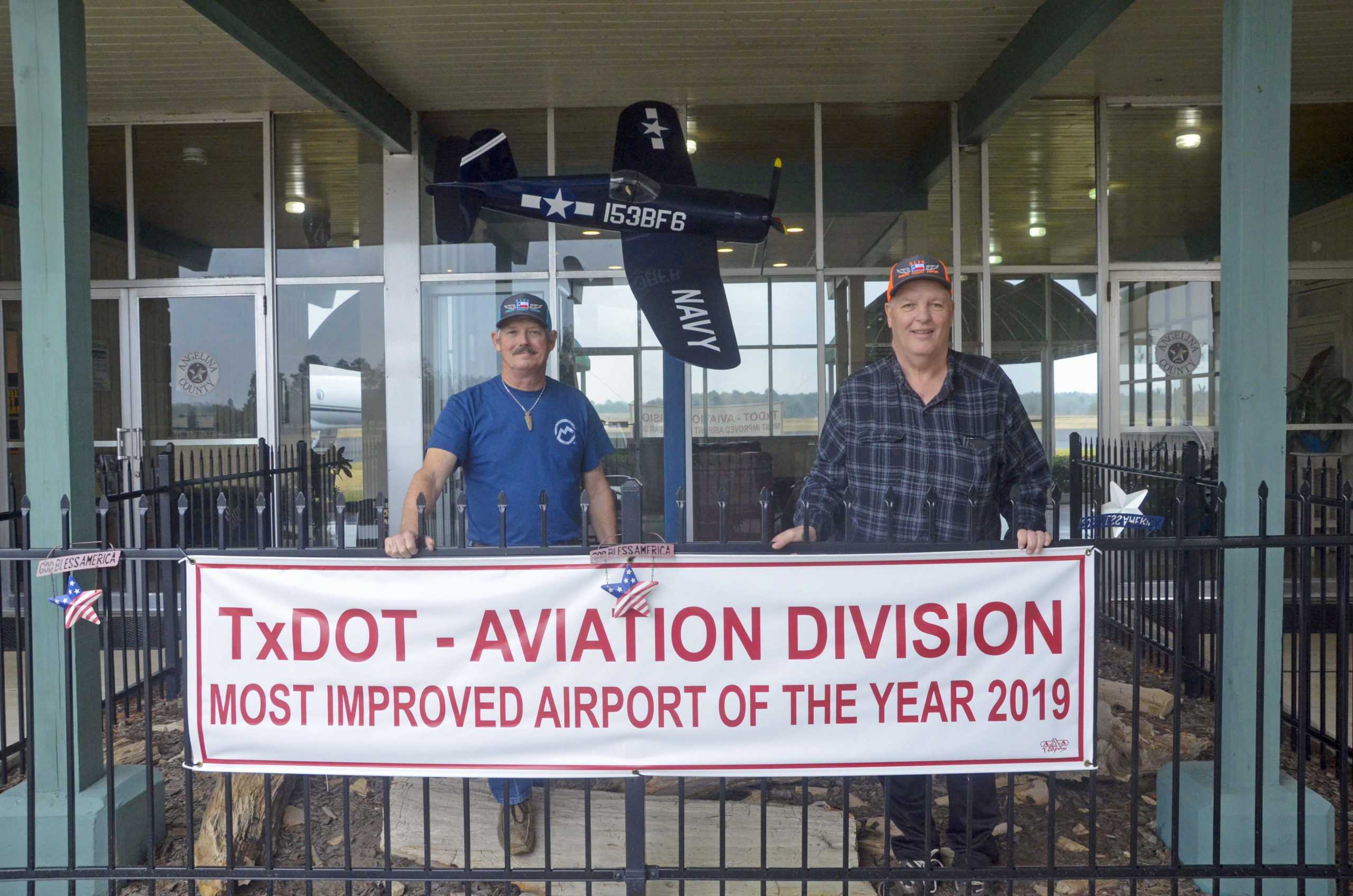
Angelina County Airport Assistant Airport Manager Claude Riddle and Airport Manager Gary Letney.

The county also pitched in to the airport improvement effort by donating a courtesy car for visitors and a truck for maintenance, replacing hangar flooring and repairing asphalt at the ramp entrance gate. The county also played a large role in helping the airport prepare for a large airshow that numbered 12,000 attendees by preparing roads and fields for attendees. Finally, funds were supplied for a tractor and chain saws were purchased to help trim the 300 trees along the entrance road.

“The support of local county officials made all this possible,” noted Assistant Airport Manager Claude Riddle. “We’ve always had excellent support from the city of Lufkin and surrounding communities.”

Also contributing to the airport’s overhaul was the Experimental Aircraft Association, who provided funds for tool and oil storage buildings and built three pavilions for public use, such as enjoying lunch at the airport café while watching planes. The Experimental Aircraft Association also provided funds for the Space Shuttle Columbia disaster memorial.

The aforementioned café is a popular destination for both aviators and the local community who keep the place hopping while enjoying their delicious cheeseburgers. The café is open 7:00AM-2:30PM Monday through Saturday and offers excellent views of the field.

Next up for the airport is future hangar development and taxiway construction to address the demand for hangar space and a game fence.

But perhaps the greatest point of pride for the Angelina County Airport is that it is completely self-sufficient.

“Politically, it’s always great to tell someone about our $26 million a year economic output, and that we don’t take any local taxpayer money,” said Letney. “When you think about what a tremendous asset that is—it’s all about the local community and businesses who drive that economic growth. We want to provide first class facilities so that we continue to attract businesses to use our airport.”

Filed Under: Wingtips Spring 2020 Tagged With: Angelina County Airport

New Texas Aviation Advisory Committee Members Appointed

May 6, 2020

Three new members of the Texas Aviation Advisory Committee were recently appointed by the Texas Transportation Commission. The Texas Aviation Advisory Committee provides input to TxDOT on its aviation development programs and serves as the representative among aviation users. Committee members also work with members of the Texas Legislature on various aviation issues.

Bob McCreery

Bob McCreery has served as the General Manager of McCreery Aviation for 39 years. McCreery Aviation is a 72-year old full-service, family-owned fixed-base operation at the McAllen Miller International Airport. The company offers services in aircraft refueling, maintenance, parts, avionics, air charter, air ambulance, aircraft sales and flight training. Mr. McCreery is a licensed pilot and lives in McAllen.

Justine Ruff

Justine Ruff is a 1990 graduate of Embry-Riddle Aeronautical University where she earned a Bachelor of Science degree in Aviation Business Administration. She has been the Director of Airports for the City of Midland since 2015 and is directly responsible for the operation of Midland International Air and Space Port and Midland Airpark. Prior to assuming the position of director, she was employed for over 20 years with 12 years as deputy director. She lives in Midland.

Robert Dixon Tips

Robert Dixon Tips, also known as Dick, serves as Chairman, Chief Executive Officer, and President of Mission Park Funeral Chapels and Cemeteries. For the past four decades, Mr. Tips has devoted himself to building one of the leading family-owned funeral companies in Texas. He is a member of Texas Cemeteries Association and is one of San Antonio’s most recognized business leaders. Mr. Tips attended the University of Texas in Austin.

Filed Under: Wingtips Spring 2020 Tagged With: Texas Aviation Advisory Committee

Texas Aviation Conference Postponed

May 6, 2020

To combat the spread of COVID-19, the 38th annual Texas Aviation Conference has been postponed. We are working with the venue to set a new date and will be in touch with each registered participant once a new date is in place. You will have the opportunity to transfer your registration to the new date and if you are not able to attend on the new date, your registration fee will be refunded.

“Obviously we are all disappointed to postpone the conference this year, but our priority is to keep everyone healthy and safe,” said TxDOT Director of Grant Management and Administration Kari Campbell. “I would like to thank everyone for their support as we navigate this challenging and developing public health issue. I’m confident that we will be able to schedule a new date at the same location and have another successful conference this year.”

As it becomes available, additional information will also be posted on the conference website at https://events.tti.tamu.edu/conference/tac20/.

NOTE: The Texas Aviation Conference has been rescheduled for August 17–19. Online registration is open.

Filed Under: Wingtips Spring 2020 Tagged With: 2020 Texas Aviation Conference, COVID-19, Texas Aviation Conference

Grants Receiving Texas Transportation Commission Approval

September 26, 2019

Gainesville Municipal Airport
$518,820
Rehabilitate and mark taxiway B; and remove excess pavement along taxiway B.

Madisonville Municipal Airport
$918,900
Rehabilitate and mark rehabiliate and mark Runway 18-36, rehabilitate apron and cross taxiway; repair medium intensity runway lights, segmented circle and lighted wind cone; and install shoulder grading, new ditches and new culverts.

Lamesa Municipal Airport
$1,968,810
Rehabilitate and mark Runway 16-34 and Runway 7-25; rehabilitate taxiway A, B, C, D, E, F, J, K & L; rehabilitate apron and hangar access taxiway M; and install precision approach path indicator-2.

Quanah Municipal Airport
$686,170
Rehabilitate and mark Runway 17-35 and taxiway A; rehabilitate apron; pavement strength evaluation and precision approach path indicator repair and service.

Wilbarger County Airport/Vernon
$775,340
Rehabilitate and mark Runway 16-34; rehabilitate parallel taxiway to Runway 2-20; and hangar access taxiways; rehabilitate and repair apron; and mark apron and taxiways.

Brooks County Airport/Falfurrias
$675,000
Replace runway 17-35 medium intensity runway lights with LEDS and airfield sign and replace PAPIs.

McGregor Executive Airport
$617,910
Overlay and mark public apron area.

Rusk County Airport/Henderson
$1,365,337
Rehabilitate and mark Runway 17-35 and seal shoulders; construct new hangar access taxiway; rehabilitate parallel and cross taxiways, HMA hangar taxiways, PCC hangar apron, terminal apron and south PCC hangar apron.

Athens Municipal Airport
$1,456,940
Reconstruct north parallel taxiway and cross taxiway and reconstruct apron.

Devine Municipal Airport
$401,980
Rehabilitate and mark Runway 17-35; rehabilitate terminal apron; rehabilitate and mark taxiway leading to terminal apron; and rehabilitate airport access road.

Filed Under: Wingtips Summer 2019 Tagged With: Grants Received

Airport Featured Photo

September 26, 2019

moore county airport at sunrise

Moore County Manager Brandon Cox captured this stunning Panhandle sunrise on August 14.

If you have a photo that you would like featured in Wingtips, please submit your high resolution image to [email protected].

Filed Under: Wingtips Summer 2019 Tagged With: Moore County Regional Airport

New FAA Regulations Require Towers Under 200 Ft. to be Marked

September 26, 2019

New FAA regulations require landowners to mark any towers between 50 and 200 ft. on their property, as well as include the towers in a new database the FAA is developing.

Previously, towers under 200 ft. were not subject to any federal marking requirements, according to officials with the National Agricultural Aviation Association. The new requirements are due to provisions in the FAA Extension, Safety and Security Act of 2016 and the FAA Reauthorization Act of 2018.

Under the provisions in these laws, meteorological evaluation towers (METs) meeting the requirements stipulated in the bills must be both marked and logged in to the FAA database. Communication towers of the same size have the option to be either be marked or logged in the FAA database.

The FAA Reauthorization Act of 2018 requires this database to be functional by October 2019. The FAA is also finalizing the marking requirements for these towers, but they are expected to be similar to the standards found in FAA Advisory Circular 70/7460-1L.

“From a safety perspective, being transparent about the existence of low-level obstacles is vital to agricultural pilots and other aircraft flying in the airspace between zero and 400 ft., such as police and first responder aircraft, aerial firefighters and pipeline patrol pilots,” NAAA officials said.

The FAA’s Digital Obstacle File (DOF) provides information about potential obstacles in pilots’ flight path before they take off. Once pilots download the FAA’s Digital Obstacle File or Daily DOF, they can import it into Geographic Information Systems applications, such as agricultural aviation applications.

FAA Advisory Circular 70/7460-1L – on obstruction marking and lighting – details the ways different types of obstructions may be marked. The document provides specifications on lighting systems, colors and light intensities. As an alternative to lighting, the document also explains tools for the “unlighted marking” of obstructions. This includes paint colors and patterns, as well as specifications for guy wire sleeves and high-visibility spherical markers.

“Aerial applicators have been at the forefront of ensuring a safe airspace for low-flying pilots for years,” said NAAA Executive Director Andrew Moore. “We encourage farmers, landowners and tower companies to familiarize themselves with the dangers of unmarked, low-level towers. Towers in and around productive farmland may prevent a crop from being treated by air if it is too difficult or unsafe for an ag pilot to treat.”

Association officials note that since 2008 there have been 22 tower-related agricultural aircraft accidents resulting in nine fatalities. The number of accidents and fatalities is even higher when other low-level operations, such as EMS-Medevac operations, are included.

Filed Under: Wingtips Summer 2019

« Previous Page
Next Page »
Texas A&M Transportation Institute

3135 TAMU

College Station, TX 77843-3135

(979) 317-2000

State Resources

The State of Texas

Texas Homeland Security

Texas Veterans Portal

State Expenditure Database

Statewide Search

State Auditor’s Office Hotline

Policies

TAMUS Risk, Fraud & Misconduct Hotline

Site Policies

Open Records Policy

Statutorily Required Reports

TTI Rules

Veterans

Equal Opportunity

Jobs

A member of the Texas A&M University System

© Copyright 2026 Texas A&M Transportation Institute (TTI)