
• Skip to primary navigation
  • Skip to main content
  • TTI Home
  • TTI Library Catalog
  • Aviation Research Home
  • Contact Us
Texas A&M Transportation Institute logo
Aviation Research
  • About
  • System Planning and Research
  • Aviation Education
  • Texas Aviation Conference
  • Publications
    • Wingtips
  • News

Wingtips Fall 2017

Dave’s Hangar

January 18, 2018

New FAA medical certification program off to a great start!

Basic Med, a new path for meeting the medical requirement for most private pilots, is off to a flying start. The new program, which began on May 1, 2017, permits the vast majority of general aviation pilots who have held a valid medical certificate any time ten years prior to the date of the act, July 15, 2016, to never again have to take a FAA approved medical examination. During the first 100 days of the program, more than 15,000 pilots have qualified to fly under Basic Med.

Before flying under Basic Med, pilots must get a physical exam by a state-licensed physician, have the associated checklist completed by the physician, and complete the online aeromedical course-in that order. A pilot meeting these requirements will be permitted to fly non-commercial VFR or IFR flights in aircraft weighing up to 6000 pounds, having no more than six seats, no higher than 18,000 feet, at a maximum airspeed of 250 knots.

There are four steps in qualifying for Basic Med certification.

  • Step one is to download the Comprehensive Medical Examination Checklist and fill out the “individual information” section.
  • Step two is to take the checklist to any state-licensed physician who will complete the physical examination following the checklist and then sign it.
  • Step three is to complete the medical self-assessment course and pass the quiz. After taking the quiz, you complete a form
    to be transferred to the FAA containing the physician’s identifying information.
  • Step four is to print the course completion certificate and keep it with your logbook or store it electronically.

I would highly recommend contacting AOPA’s Pilot Information Center staff at 1-800-872-2672 if you have any questions. Speaking from personal experience, they were great in helping me through
the process.

Basic Med is the single most important thing to happen for the General Aviation Industry in a long time. More people will be learning to fly, buying airplanes, and flying longer than ever before. AOPA member and Senator Jim Inhofe of Oklahoma, deserves a great deal of credit for leading the Basic Med effort to a successful conclusion.
Back to main menu

Filed Under: Wingtips Fall 2017 Tagged With: Dave Fulton, dave's hangar

Greetings From Stinson Airport

January 18, 2018

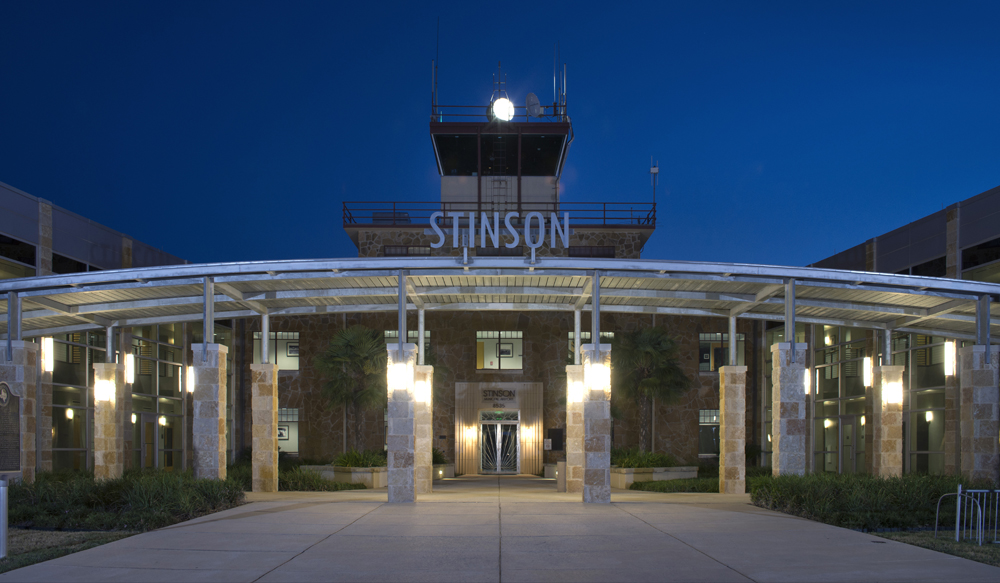
Stinson Airport terminal at night.By Chris Sasser
Texas A&M Transportation Institute

San Antonio is a city steeped in history. Whether touring the iconic 18th-century Spanish mission The Alamo or the Spanish Governor’s Palace, to any visitor it’s clear that the city embraces its rich cultural history. Stinson Municipal Airport (SSF), a designated reliever airport located seven miles south of downtown San Antonio, is the second oldest general aviation airport in continuous operation in the United States making it a perfect fit for the city.

But don’t be fooled by the 100-year-old airport’s age nor the terminal building built in 1936, which recently underwent an extensive renovation and expansion that modernized the building while maintaining the original design’s integrity. This is a modern, thriving airport in every sense of the word.

“Over the past 10 years, we’ve had $30 million in capital improvements from the terminal building expansion to the runway extension,” noted Nathan Polsgrove, Chief Strategy and Development Officer for the San Antonio Airport System. “There’s an additional $24 million planned in the next few years. We are fortunate that our city leadership is incredibly supportive of Stinson.”

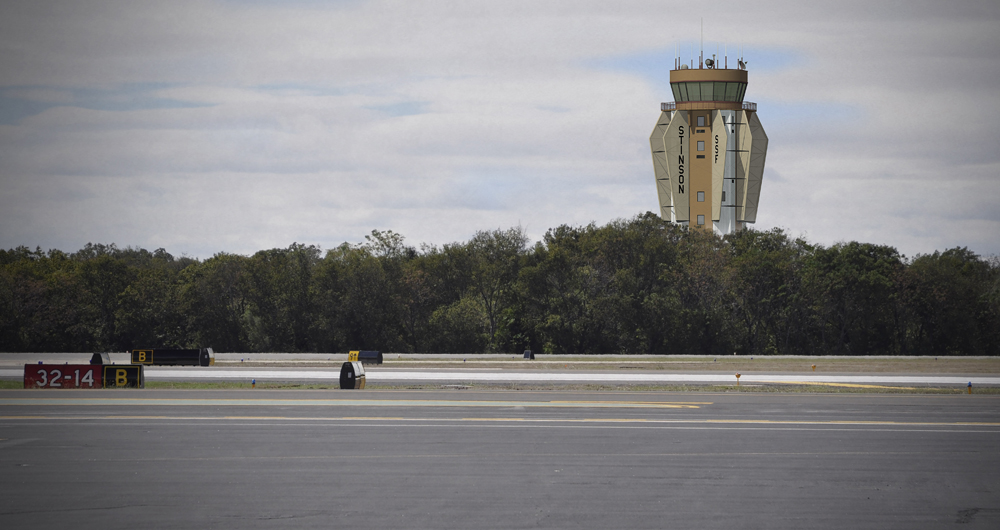
One of the upcoming projects is a new air traffic control tower that will feature a unique winged design. Construction on the new tower began on March 29.

Conceptual drawing of the new air traffic control tower at Stinson Airport.

Stinson Airport’s new air traffic control tower that will feature a unique winged design.

“We had a design competition that had 13 different architectural firms submit plans,” said Stinson Airport Manager Morris Martin. “I think it was appropriate being the wings over Stinson. It does add a little bit of cost and time to the project, but I think it shows the level of commitment that our city government has to making this airport unique. We are a good match with the history of San Antonio, and we have several projects that are going to tie into the local heritage sites.”

Martin was the recipient of TxDOT’s 2017 Reliever Airport Manager of the Year award.

One of the projects is a looped hike and bike trail connecting Stinson to the Mission Reach river trail. The $2.4 million project is slated for completion in 2018. Connecting the Stinson terminal building to the hike and bike trail will be a new parking lot and plaza, due for completion in 2017.

Other upcoming projects include a land prep project that will prepare 32 acres of property for future hangar development, a wayfinding signage project, an aeronautical survey to determine opportunities for new or improved approaches and a new parkway that will improve airport access.

Besides the ongoing improvement projects, the airport is home to a first-class FBO (FBO Gate One) and a new barbecue restaurant called The Big Bib.

Other tenants include:

  • Texas Air Museum
  • Texas Air Shuttle charter operation
  • Alamo Helicopters helicopter operation
  • San Antonio Police Helicopter Unit
  • Red Wing Aerials aerial photos

“Right now we have an RFI (request for information) about the viability of building a hangar style hotel,” said Polsgrove. “And we are implementing a frequent user loyalty program where visitors to the airport have a punch card that will go toward receiving a Stinson Airport gold coin.”

From aviation-themed movie nights to hosting kid day fly-in events, the airport has a close and important connection with the large community.

“The city is very proud of its history, and we’re an important part of that history,” said Martin. “But one of the things we do is also look ahead to the future to keep us strong and viable for the next 100 years.”

Editor’s Note: Nathan Polsgrove is no longer employed at the San Antonio Airport System at the time of this publication.

Back to main menu

Filed Under: Wingtips Fall 2017 Tagged With: Stinson Airport, Wingtips

« Previous Page
Texas A&M Transportation Institute

3135 TAMU

College Station, TX 77843-3135

(979) 317-2000

State Resources

The State of Texas

Texas Homeland Security

Texas Veterans Portal

State Expenditure Database

Statewide Search

State Auditor’s Office Hotline

Policies

TAMUS Risk, Fraud & Misconduct Hotline

Site Policies

Open Records Policy

Statutorily Required Reports

TTI Rules

Veterans

Equal Opportunity

Jobs

A member of the Texas A&M University System

© Copyright 2025 Texas A&M Transportation Institute (TTI)