
| Topic | Deadline | Contact |
| Airport CIP’s | Airport Five-year CIPs are due annually between September 1 and December 31. (CIPs received after December 31 will be held until the following September.) |
Your Planner |
| LOI | This item becomes due in the developmental year during which the airport is ready to initiate the project outlined in its Capital Improvement Program (CIP). |
Your Planner |
| RAMP | January 31, 2026: RAMP grants must be executed for FY25 RAMP projects.
May 31, 2026: RAMP reimbursement requests must be submitted in eGrants. If RAMP funds have not been expended by May 31, 2026 and you have executed contracts or POs for eligible work between June 1, 2026 to August 31, 2026, |
RAMP Manager |
| May 1, 2026: CRRSSA reimbursement requests must be submitted in eGrants. | Grant Management Team | |
| July 1, 2026: ARPA reimbursement requests must be submitted in eGrants. | Grant Management Team | |
| IIJA | May 1, 2026: IIJA funds for 2023 must be negotiated or bid or the funding will be swept. |
Your Planner |
| The link to the approved ACIP on txdot.gov is also included here: txdot.gov/content/dam/docs/aviation/acip-fy25-20240819.pdf Changes will be coming soon regarding revisions to the project management and funding process. |
||
Wingtips Winter 2026
Texas Airport Council
Elevating and Serving General Aviation Across the Lone Star State
Texas is a powerhouse in aviation, home to nearly 300 airports and over 27,000 registered general aviation aircraft — more than almost any other state. With such a vast and vital network, a unified voice is essential to advocate for airport interests at the local, state and federal levels. That’s where the Texas Airports Council (TAC) steps in.
“Texas airports face a wide range of challenges,” said Ty Helton, TAC president and airport manager at Majors Field in Greenville, Texas. “From funding shortfalls for AIP [Airport Improvement Program] improvement grants to sponsor-related issues, noise concerns, legislative hurdles, and outdated or missing airport documentation — these problems can hinder economic development and operational efficiency.”
TAC serves as a collaborative hub for airport professionals, fostering shared expertise and problem-solving across the state. By connecting communities and industry leaders, TAC works to maximize the economic impact of airports and ensure that legislative efforts support sustainable growth and modernization.
In partnership with the Texas Department of Transportation Aviation Division, TAC is driving forward initiatives to build and maintain the nation’s leading state aviation system. From infrastructure improvements to policy advocacy, TAC is committed to making Texas airports stronger, safer and more economically vibrant.
“Our mission is to promote and support all airports in Texas,” Helton emphasized. “We educate communities about the economic value airports bring, represent member airports in matters affecting their operations and public standing, and advocate for policies that ensure long-term stability.”
To continue its work, TAC relies on a growing network of sponsors and members, including airport staff, sponsor representatives, engineers, consultants and contractors. If you’re part of the aviation industry in Texas and want to make a difference, consider joining TAC.
Learn more or become a member at https://texasairportscouncil.org/.
Across Texas Aviation
TxDOT Aviation Division’s Statewide Impact
North Region: Wood County Airport
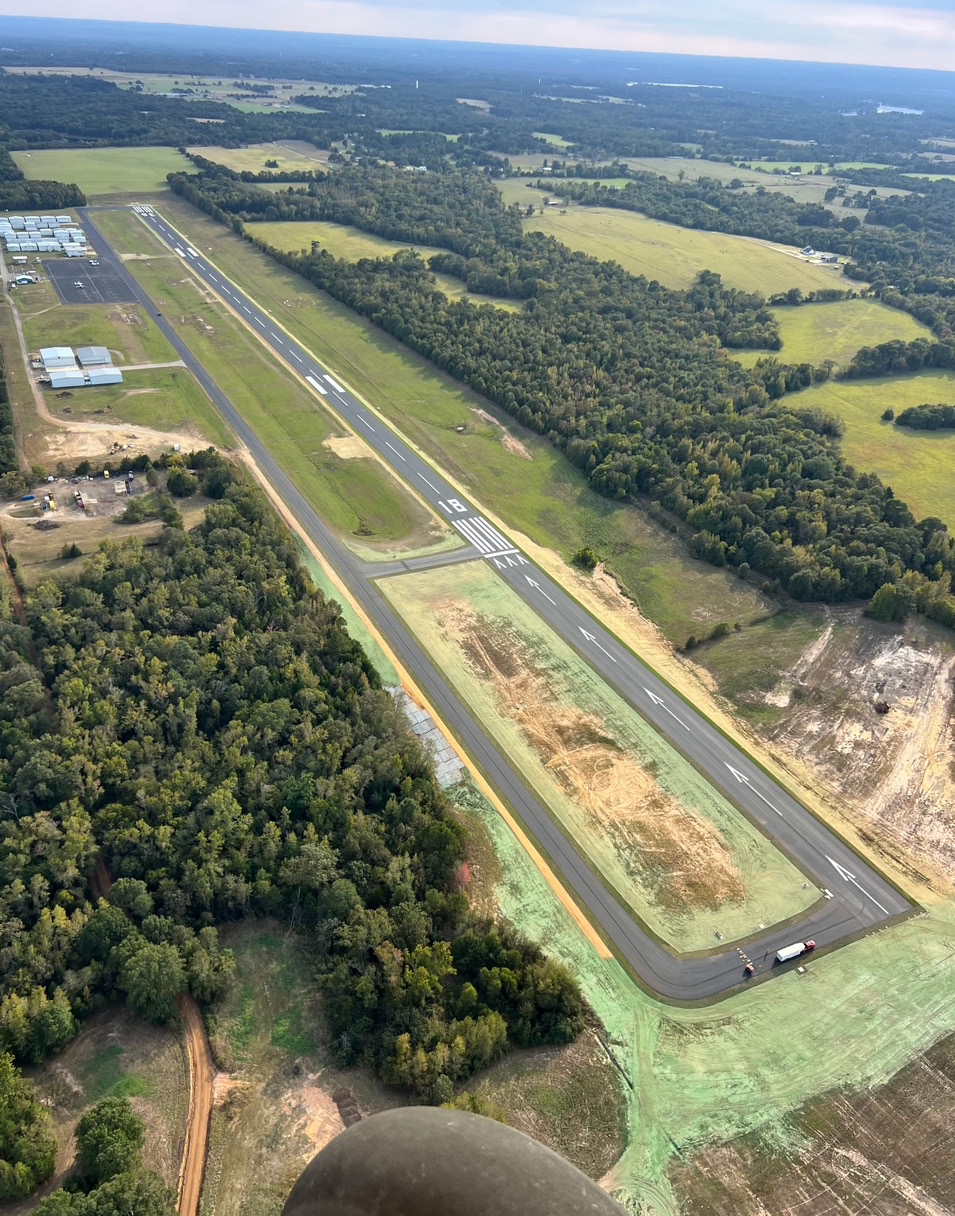
Wood County Airport Collins Field recently completed a runway lengthening and widening project using a state rider, extending runway 18-36 from 4,000 feet by 60 feet to 5,001 feet by 75 feet.
-

- Completed construction on runway 18-36.
-
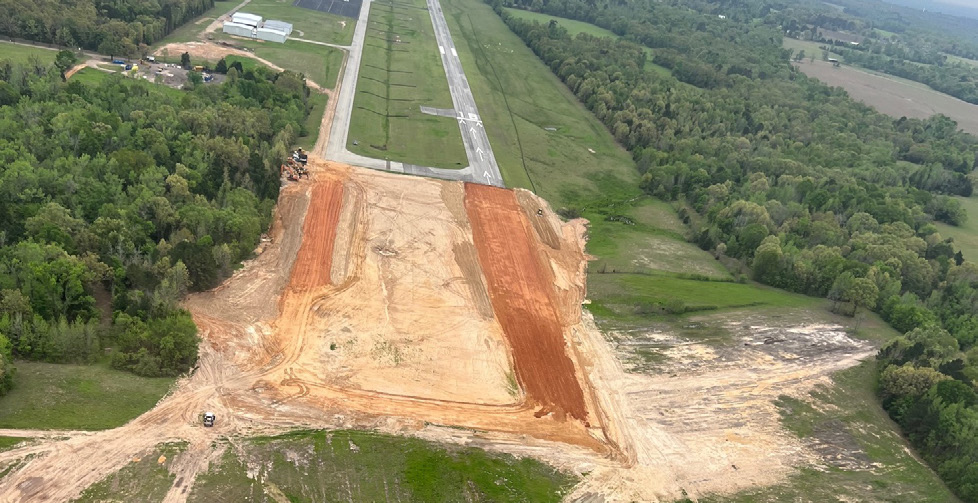
- Construction under way at Wood County Airport Collins Field runway 18-36.
South Region: Pleasanton Municipal Airport
Pleasanton Municipal Airport has had several major developments this year.
With assistance from the TxDOT Aviation Division, two 12,000-gallon fuel tanks (Jet A and 100LL) and dispensing equipment were completed, along with a concrete driveway and unloading rack. These improvements support future airport expansion, with the city recently purchasing an additional 500 acres. Two 80-foot by 80-foot hangars with offices and Americans with Disabilities Act–compliant restrooms are under construction.
-

- New hangar under construction at Pleasanton Municipal Airport.
-
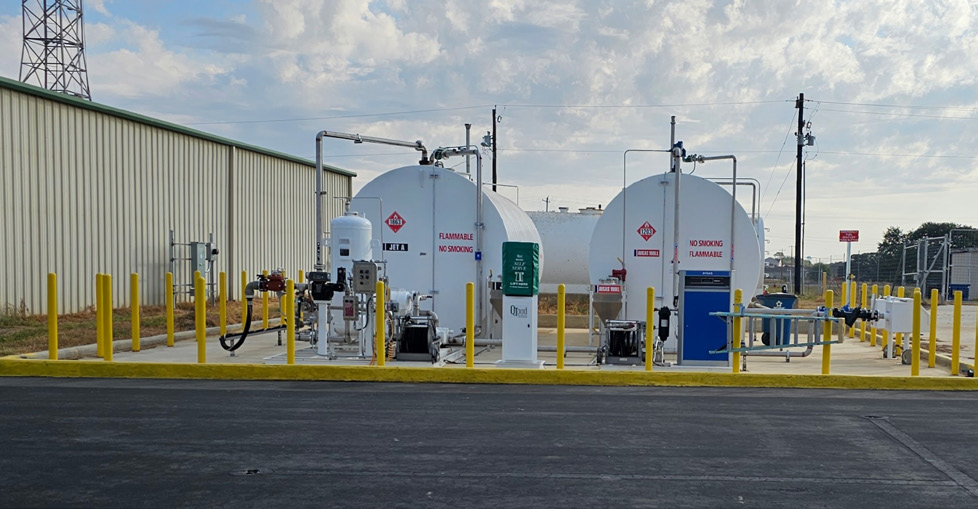
- New 12,000-gallon fuel tanks at Pleasanton Municipal Airport.
Supporting Texas Airports Through AWOS Upgrades
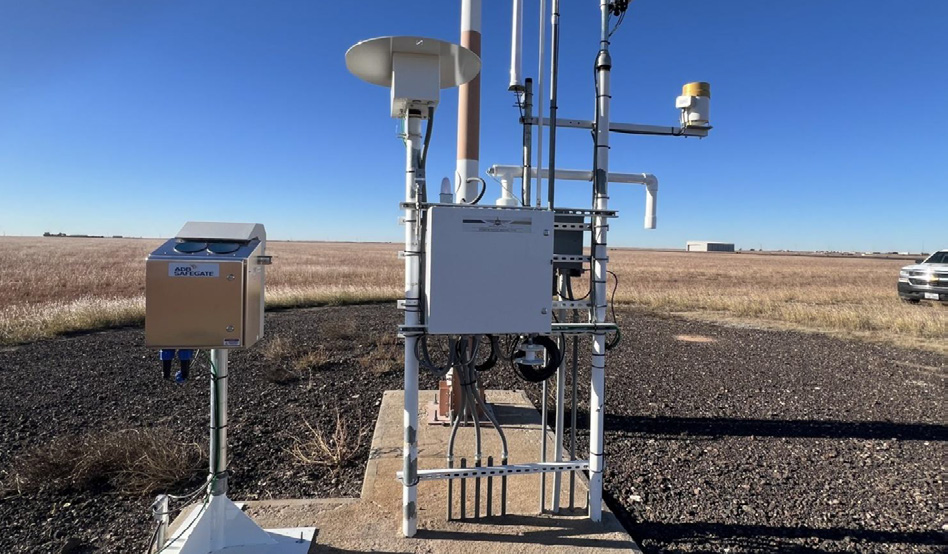
AWOS upgrades at the Moore County Airport.
TxDOT’s Aviation Division is working with local airports across the state to replace outdated automated weather observing systems (AWOS). These systems provide real-time weather and runway information that pilots depend on during every stage of a flight.
Airports interested in replacing or installing an AWOS begin the process by submitting a request to their TxDOT planner. Once the request is received, TxDOT evaluates the condition and performance of the existing equipment and determines whether the project meets eligibility requirements. Priority is given to systems that are no longer functioning properly or have exceeded their useful life, and to airports that do not currently have an AWOS installed.
Several airports already have executed grants for AWOS replacements, with installation and completion expected over the next year. Additional airports are included in future years of the Aviation Capital Improvement Program as funding becomes available and requests are approved.

AWOS upgrades at the Gillespie County Airport.
The upgraded AWOS-3PT systems represent a significant improvement over many of the older units still in service. The new systems include ultrasonic wind sensors, thunderstrike alerts and improved weather detection capabilities designed to produce more accurate and dependable data. Pilots rely on this information to evaluate visibility, wind speed and direction, temperature, runway conditions, and potential weather hazards. Continuous live-feed updates allow pilots to make informed decisions throughout their approach and departure.
By supporting airports through this replacement effort, TxDOT is helping ensure that essential weather and runway information remains reliable and accessible. The modernization of AWOS equipment strengthens safety, improves situational awareness for pilots, and supports the long-term operational needs of airports across Texas.
Advancing Aviation Innovation
A Q&A with TxDOT’s Emerging Aviation Technology Section
 In spring 2025, TxDOT’s Aviation Division launched the Emerging Aviation Technology Section to lead the integration of emerging technologies into Texas’ aviation ecosystem.
Now, nearly a year later, Director Sergio Roman and his team, William Graffis and Travis Baxter, share insights into the section’s growth, its ongoing projects and the future of aviation innovation in Texas.
Q. What needs or goals drove the establishment of the Emerging Aviation Technology Section?
A: The establishment of the Emerging Aviation Technology Section wasn’t just an administrative decision; it was a strategic response to the realization that the aerospace economy — specifically advanced air mobility (AAM) — is fundamentally changing the definition of transportation. The State of Texas recognized that this is not an isolated technology but an integral component of a future multimodal system. To capture the economic benefits and quality-of-life improvements for Texans, we needed a dedicated team to plan and execute this integration. The direct catalyst was the work of the Urban Air Mobility Advisory Committee, which later evolved into the AAM Advisory Committee. Its key recommendation was for TxDOT to establish a specific office to serve as the primary point of contact — a central front door — for local municipalities, state entities and private stakeholders navigating this complex landscape. Consequently, our section was chartered with a dual mandate: to sustain and professionalize the department’s existing small unmanned aerial system (UAS) program — supporting infrastructure inspection and fleet management — and to lead the state’s strategic initiatives in AAM. We exist to ensure that as the sky becomes busier, it also becomes a functional part of our transportation network.
Q. Since launching in 2025, how has the Emerging Aviation Technology Section evolved in scope or focus?
A: Our evolution has been defined by expanding the envelope — both literally and figuratively. While we began with a focus on integrating drones into the airspace, we have significantly widened our aperture to include the department’s early interactions with the space economy. Texas is a hub for aerospace innovation, and we are now actively collaborating with the state’s Tier 1 research universities to define the infrastructure requirements for the future. We are asking the critical questions: What does a general aviation airport need to support the space economy? We are essentially blueprinting the space-ready airports of tomorrow.
Operationally, we have matured into a vital component of the state’s emergency and disaster response. When minutes matter, our ability to deploy advanced technology for rapid damage assessment has proven invaluable.
Furthermore, on the daily operations side, we are constantly refining how TxDOT uses small drones, ensuring they aren’t just novelties but standard, integrated tools for everything from bridge inspections to traffic monitoring.
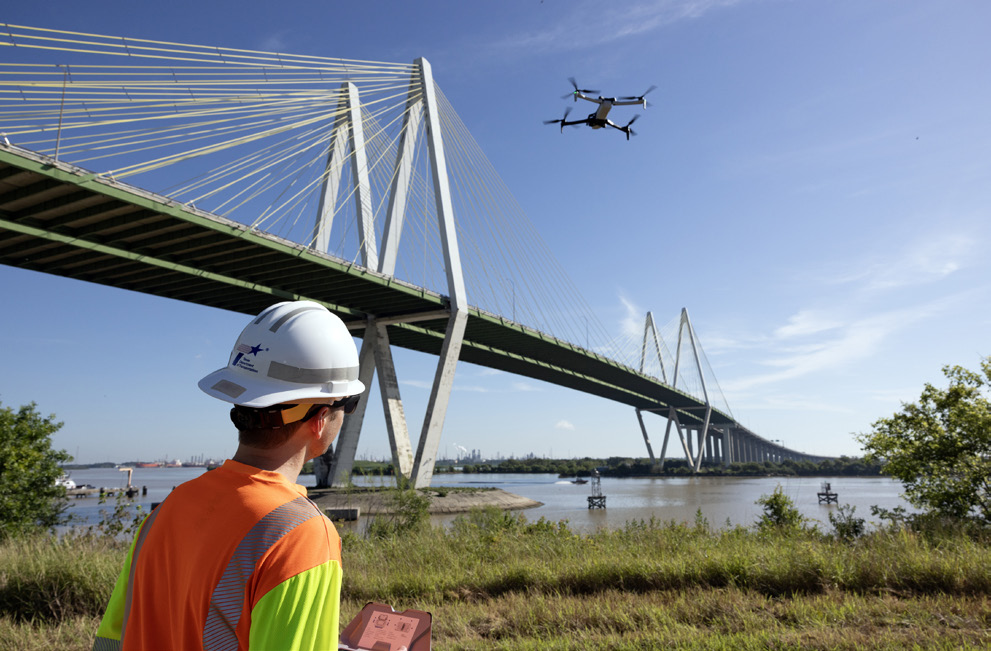 Q: What are some key milestones or projects your team has achieved over the past year?
A: We have hit three major strides this year that define our trajectory.
First, on the small-drone side, we have successfully crossed the chasm from startup to sustainment. We are no longer trying to sell the concept of drones to the districts; the demand is already there. We are now running a well-oiled machine that scales effortlessly.
Second, we have become integral to TxDOT’s Digital Delivery Initiative. We aren’t just taking pictures; we are capturing data that feed directly into digital twins and 3D models. We’ve demonstrated that drone data can integrate seamlessly into engineering workflows, providing a massive return on investment by reducing survey time and improving design accuracy.
Finally, and most soberingly, our section underwent a trial by fire during the July 4 Central Texas flooding. That event was a tragedy that cost too many Texan lives, but it was also a proving ground for our capabilities. We were able to deploy immediately to support search and rescue and provide rapid damage assessment of bridges and roadways that were otherwise inaccessible. The event proved that our section isn’t just about future tech — it’s about providing safer, faster and more efficient methods to restore the quality of life for Texans when they need it most.
Q: How are you collaborating with airports, local governments and private partners to advance emerging aviation technologies?
A: We view ourselves less as regulators and more as force multipliers. Our collaboration typically happens through direct outreach, mentorship and side-by-side project execution.
With airports, our primary conduit is the division’s airport planners and engineers. They are the boots on the ground who translate the strategic vision into concrete infrastructure. A prime example of this is the upcoming eVTOL Integration Pilot Program (eIPP). We are working closely with select airports to ensure they are ready to serve as key nodes for AAM operations — essentially turning general aviation airfields into the launchpads of the future.
With local governments, we have an open playbook policy. We’ve worked with numerous cities and counties interested in starting their own drone programs. Instead of letting them reinvent the wheel, we give them our formula — our standard operating procedures and training manuals. We want every public entity in Texas to benefit from these tools just as we have.
With private industry, we work regularly with private partners to establish the conditions necessary for safe innovation. Our role is to signal that Texas is open for business but also to ensure that any public-private partnership has a tangible public benefit. Whether we are deploying new sensors or testing novel airframes, our north star is always the improvement of quality of life for Texans. If a project improves safety or efficiency for the public, we are there to help clear the runway.
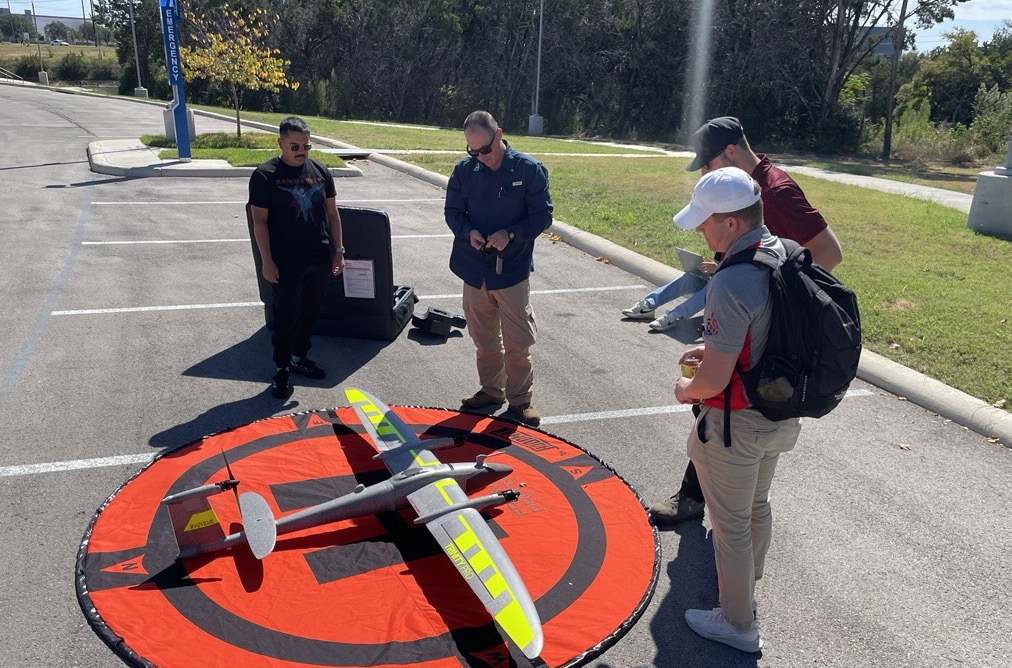
Q: How do you see these technologies changing the aviation landscape in Texas over the next five years?
A: We see a fundamental restructuring of the aviation map in Texas.
On the AAM front, the catalyst is the Federal Aviation Administration (FAA) eIPP. This is a game changer because it functions as a three-year operational test bed that grants specific approvals for operations that would typically require a completed type certification. This regulatory agility allows us to fly before we buy in terms of full-scale commercialization. The program allows airports and operators to answer the business questions that engineering simulations can’t: What does safe, scalable interaction with general aviation traffic look like? What does airport revenue generation actually look like?
We aren’t just talking about flying taxis in downtown Dallas. We’re looking at a democratization of aviation for rural Texas. Underused general aviation airports — some of which see very little traffic today — could transform into vibrant hubs for medical transport, high-priority freight and regional passenger connectivity.
On the small-drone side, the revolution is in beyond visual line of sight (BVLOS) operations and digital twins. We’re moving from taking photos to creating photorealistic, engineering-grade digital models of our airports. For planners, engineers and airport sponsors, this means having a living, digital replica of their facility to manage assets, predict maintenance needs, and simulate future expansions with millimeter-level accuracy.
Q: What challenges have you encountered as new technologies continue to develop rapidly?
A: The fundamental challenge is the velocity mismatch: Technology moves at an exponential pace, while government — by design — moves linearly.
In the private sector, move fast and break things is a valid strategy. In our world, where we deal with public safety and taxpayer dollars, we don’t have that luxury. We have to be extremely deliberate about how we assess innovation. We can’t chase every shiny new airframe that hits the market; we have to validate that it actually solves a transportation problem better than our current tools.
The regulatory lag is the other side of that coin. Rulemaking is a rigorous, time-consuming process, and typically, by the time a regulation is fully codified for a specific technology, the industry has already pivoted to the next generation. We’re often aiming at a moving target.
To counter this, we focus on capabilities rather than just hardware. Instead of writing policy for a specific drone model that will be obsolete in six months, we try to build frameworks around the data we need and the safety outcomes we require. This allows us to remain flexible even as the gadgets themselves change.
Q: How is safety being maintained as innovation accelerates?
 A: Safety isn’t just a priority for us; it’s the fundamental constraint within which all our innovations must occur. TxDOT’s agency-wide mandate is to “design, build, operate and maintain our transportation system with safety as our no. 1 priority.” That mission doesn’t change just because the vehicle has rotors instead of wheels.
To maintain this standard while moving fast, we use a crawl, walk, run operational model. This methodical pacing allows us to be aggressive with our learning but conservative with our risk. It ensures that when we finally flip the switch for a statewide rollout, we aren’t guessing about safety — we’re relying on data.
Q: How do you engage with airports to ensure successful adoption of new aviation technologies?
A: Our engagement philosophy is simple: early and often. We don’t wait until a technology is fully mature to introduce it to our airport partners; by then, it’s often too late to plan effectively.
We focus on three critical pillars during these interactions: clarifying the vision, defining the requirements, and demonstrating the benefit.
Q: What’s next for the Emerging Aviation Technology Section in 2026 and beyond?
A: The headline for 2026 will be (hopefully) that Texas has been awarded one of the five coveted FAA eIPP agreements. This is the green light we have been working toward.
We are continuing to bring innovative solutions to TxDOT and Texans. Whether it is BVLOS remote drone-in-a-box solutions, airport digitization, electrification or space-related activities — we are aiming to keep Texas at the forefront of innovation.
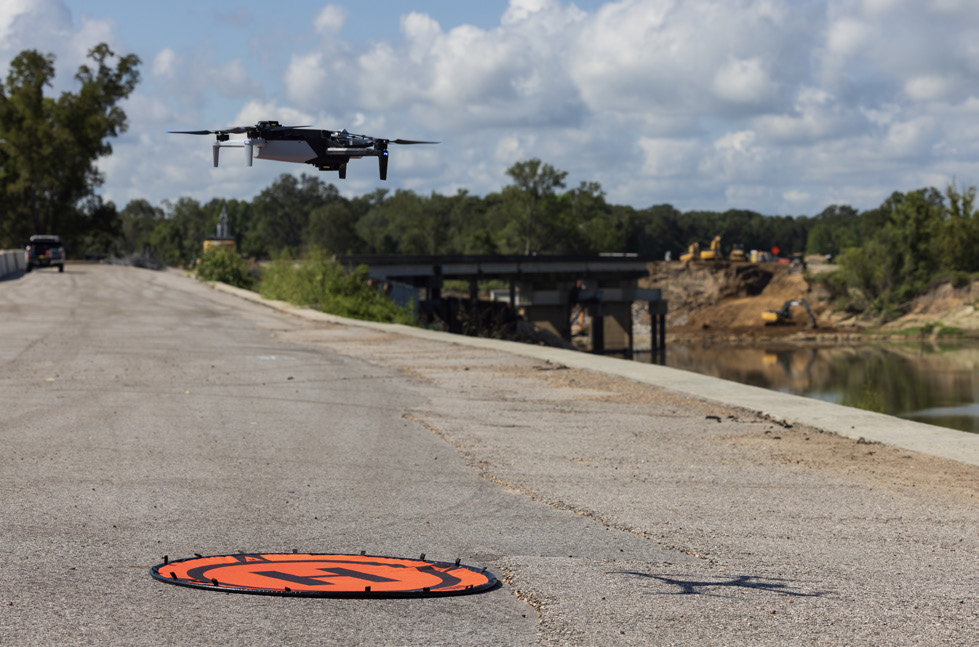 Q: Is there anything else you’d like to share about the section’s progress or what’s ahead?
A: I think the best way to close is to bring it back to our foundation. Everything we have discussed today is driven by two guiding statements.
Our mission: To lead Texas aviation into a future of innovation and progress by safely integrating emerging technologies, such as AAM and UAS, while fostering collaboration, promoting economic growth, and enhancing the quality of life for all Texans through a safe, efficient and sustainable aviation system.
Our vision: A Texas where aviation seamlessly connects communities and drives progress, powered by cutting-edge technologies, responsible environmental practices and a collaborative spirit that elevates the Lone Star State as a leader in the future of flight.
TxDOT Aviation Celebrates National Aviation Day
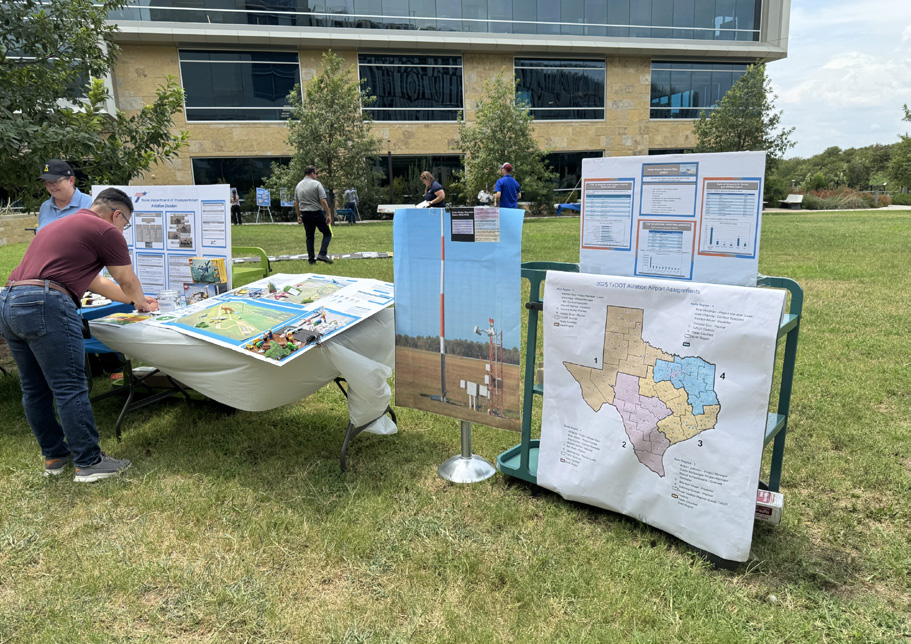
The Texas Department of Transportation (TxDOT) Aviation Division hosted its National Aviation Day celebration on Aug. 19, 2025, welcoming 150 attendees, including TxDOT employees and aviation business partners. The Aviation Division highlighted Texas’s aviation history and showcased the Adopt-an-Airport Program, which encourages participants to adopt and beautify an airport, elevate their public image, and boost community awareness.
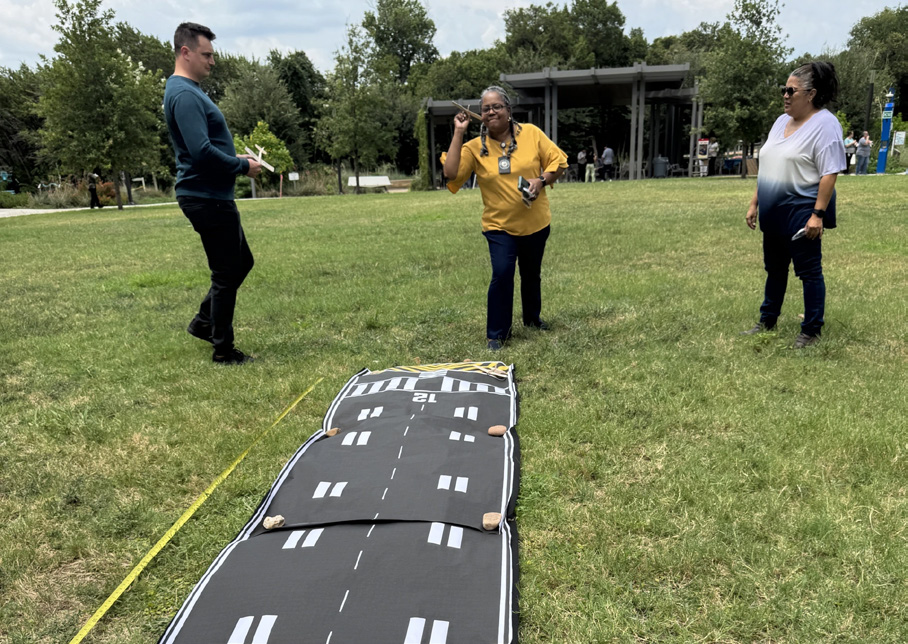
The event featured drone demonstrations, an airport environmental hazard display and several hands-on activities, including meet a pilot, an airplane mechanics booth, a runway-airplane toss game and a cockpit photo booth. The event also showcased the division’s annual K–12 art contest, part of the Fédération Aéronautique Internationale’s International Aviation Art Contest, which inspires young artists to illustrate the importance of aviation through art.
To learn more about Aviation Day and the Aviation Division, watch https://www.youtube.com/watch?v=5M2wyXR2aHg.


On the Radar
by Dan Harmon, TxDOT Aviation Division Director
I hope that everyone had a great fall. It’s been a busy season for the Aviation Division. As we entered the new fiscal year (FY), we were fortunate to receive historic levels of state and federal funding to improve airports across Texas. The legislature maintained the base funding level established by the 88th Legislature in 2023 and added over $130 million in additional project funding for a number of airports across the state. On the federal side, state apportionment more than doubled for FY2025 as a result of the provisions in the Federal Aviation Administration reauthorization bill last year. This will go a long way in trying to improve and maintain the 254 airports in our system. The team has been working closely with the airport sponsors to identify and prioritize projects and program funding, and to move designs and construction forward.
We’ve also been working with stakeholders across the state and nation to help shape the next phase of aviation as advanced air mobility and electric vertical takeoff and landing become more of a reality each day. The Emerging Aviation Technology Section has done some great work in this area, and you can read more about their efforts in this issue.
And lastly, big changes are occurring at Flight Services. The legislature provided funding for us to upgrade the state aircraft fleet. We’ve added a Citation Latitude to the fleet, giving us both more seating capacity and greater unrefueled range. We’re also procuring a Cessna Caravan to replace the aging utility aircraft, adding a new degree of flexibility in both capacity and capability. In addition, we received funding to increase the hangar capacity at our Austin-Bergstrom International Airport facility to serve all the state aircraft based there. That’s about it for now. I look forward to seeing everyone at the Texas Aviation Conference in March.
Fly safe!